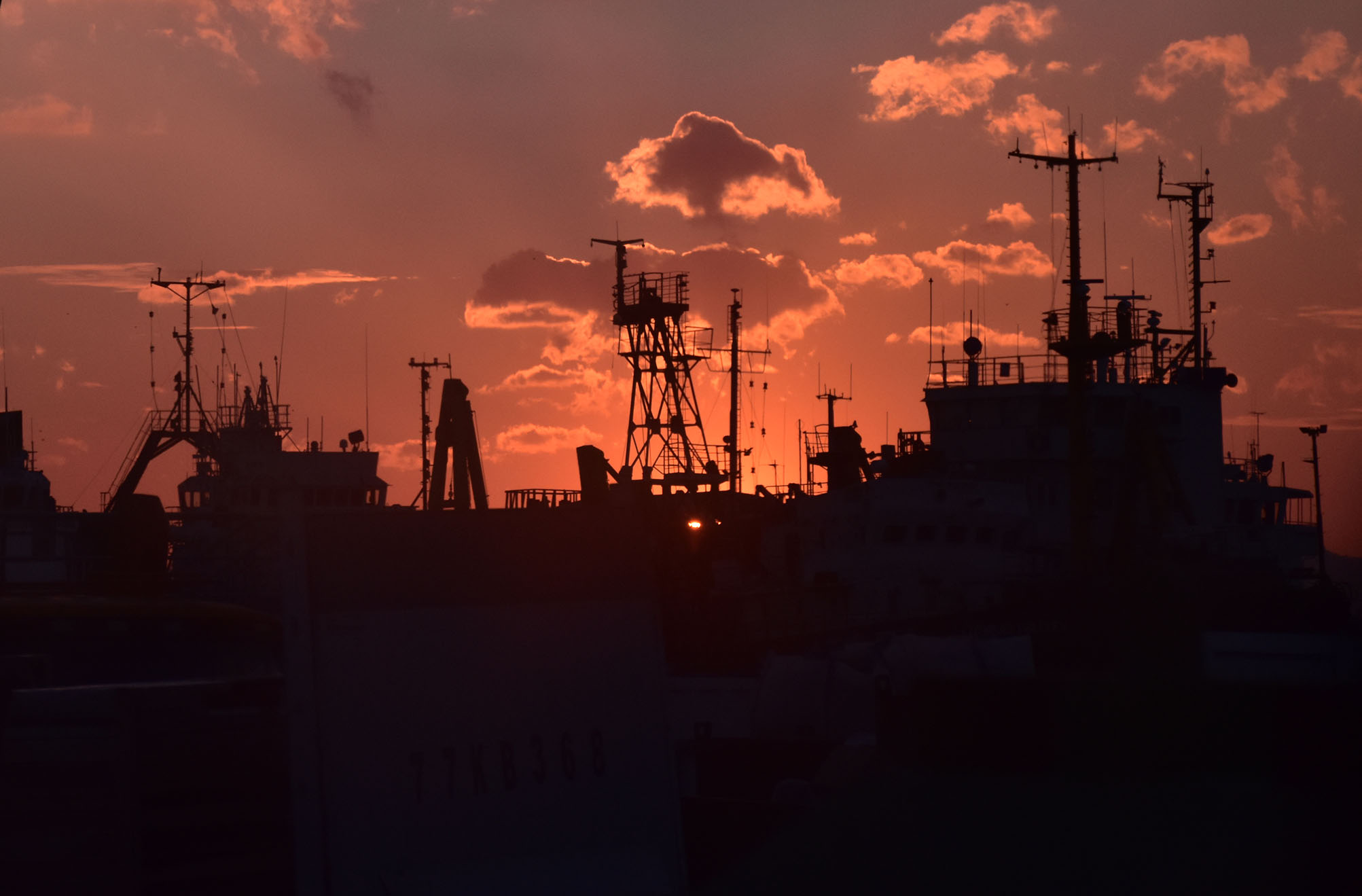
Lupine visits the world’s first offshore oil platform, a rarely visited and mysterious industrial marvel
There are two ways to travel to Neft Daşlari (Oily Rocks), the mysterious Soviet-era floating city, situated 60 miles off the coast of Baku in the Caspian Sea. One is by helicopter, the other is by ferry. As we travel along the bustling city streets of the Azerbaijani capital on a clear November morning towards the city’s dock area, it’s clear which one is in store for us today.
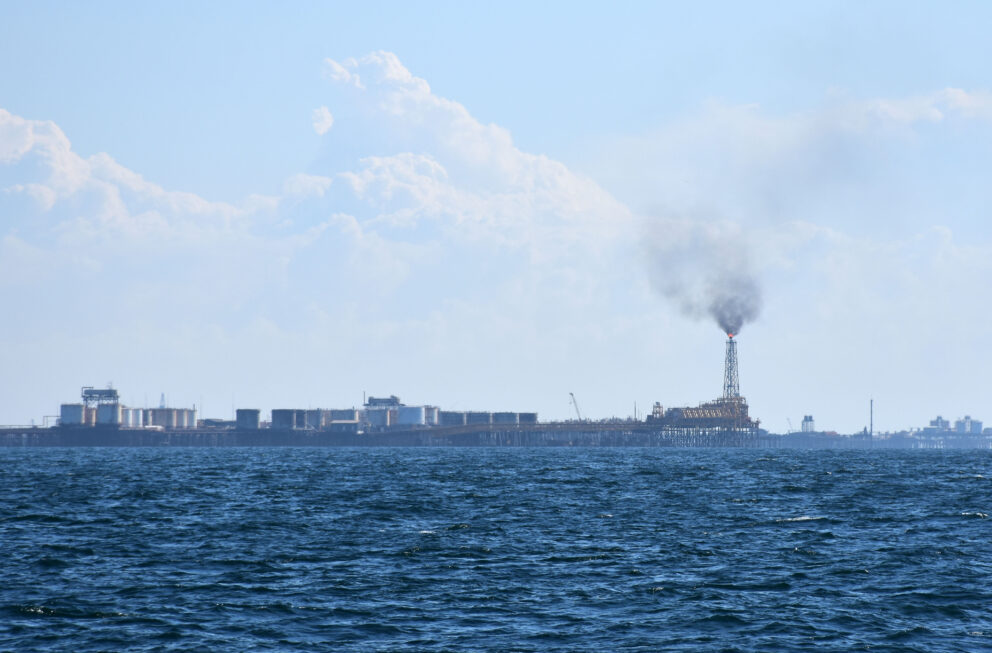
For the uninitiated, Neft Daşlari (Oily Rocks) is something of a mythical industrial marvel, a place that since its establishment as the world’s first offshore oil platform in 1949 (Guinness Book of World Records), very few people outside of the Azerbaijani oil industry have ever visited.
According to CNN, during its heyday the ‘floating city’, was made up of ‘nearly 2,000 wells and around 320 production sites, connected by more than 100 miles of bridges, and over 60 miles of oil and gas pipelines.’ 5,000 people are said to have lived on the site during its peak.
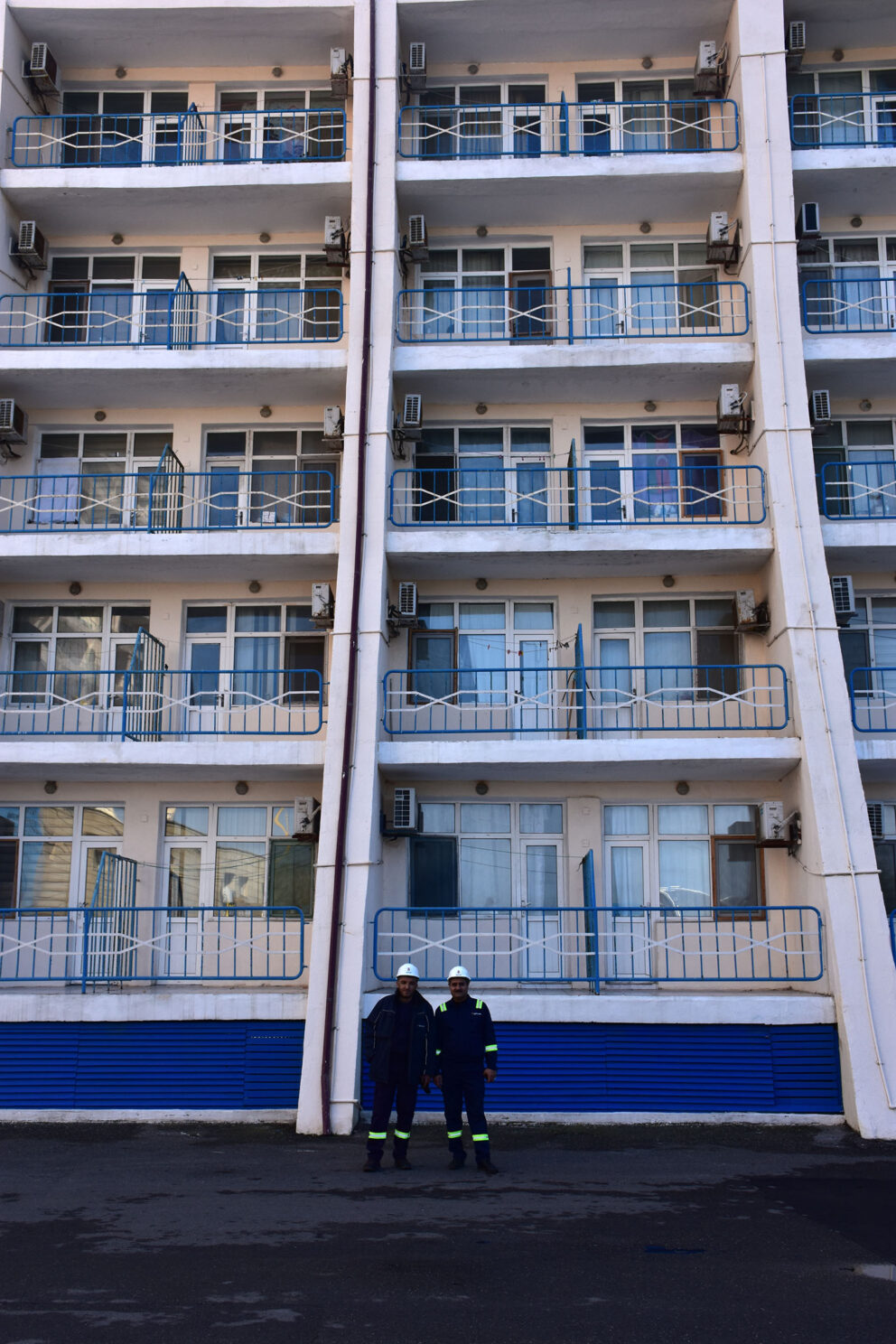
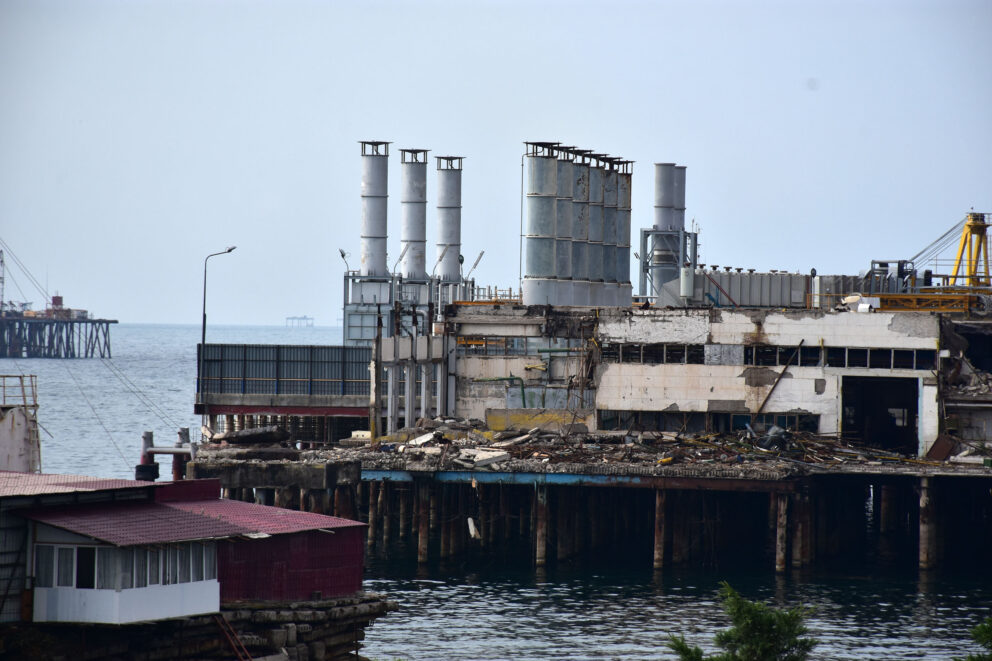
For the most part, the site’s network of tentacle-like road platforms and pipelines are dilapidated and falling into the sea, but a beating heart remains, with a central floating city home to dormitory complexes, a park, events pavilion and small football pitch. Behind the scenes we’re told there’s a library, gym and hospital. Despite much of the wider network falling into the sea, the remaining infrastructure is still extracting oil and gas.
As Baku glints behind us in the distance under blue skies and haze, we’re told by our guides that we’re only the third Western group to be allowed to visit Neft Daşlari. It’s not clear whether this includes Swiss filmmaker Marc Wolfensberger, whose film Oil Rocks: City Above The Sea (2008) is the only real window into the floating city, outside of a few dated articles online.
The ferry to Neft Daşlari takes roughly two and a half hours and for much of this time, the only things punctuating the glittering horizon are the outlines of hulking oil platforms. A safety video is screened on the ferry’s TV, cautioning against smoking and reminding us that alcohol is prohibited.
With around 30 minutes left of the journey, the ghost structures of the floating city begin to reveal themselves.
From a distance, the spindly structures of Neft Daşlari appear like charred matchsticks. Lonely wooden huts and platforms stood isolated in the sea. Then the details begin to fill out, long snaking piers leading to a central hub of pipework and industry. A truck is spotted driving along one of the road ways. Arriving into the dock, the scenery is reminiscent of Waterworld (1995) via a Victorian seaside pier.
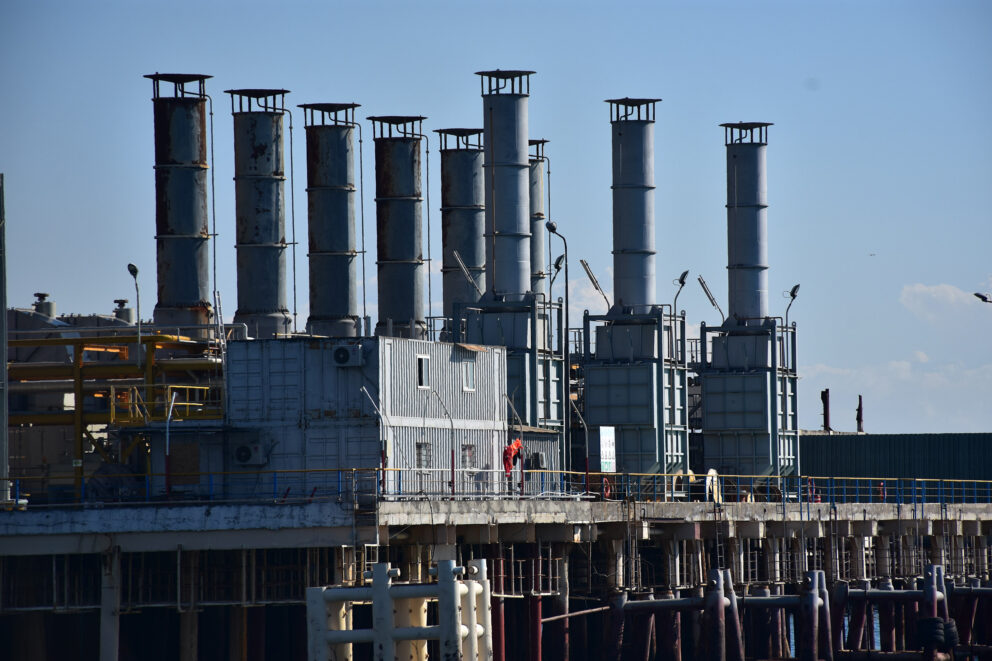
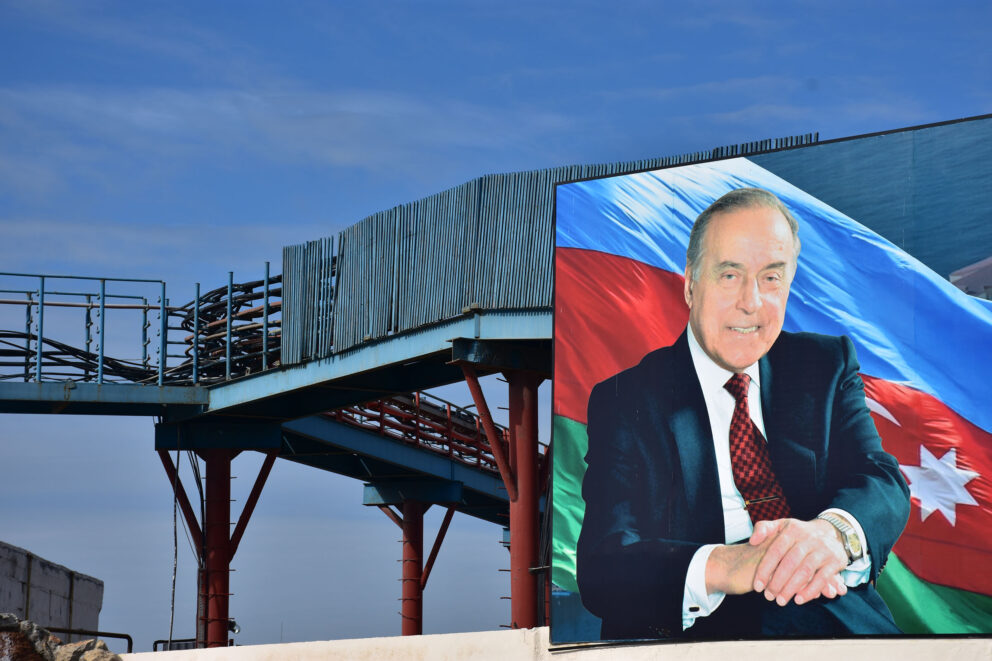
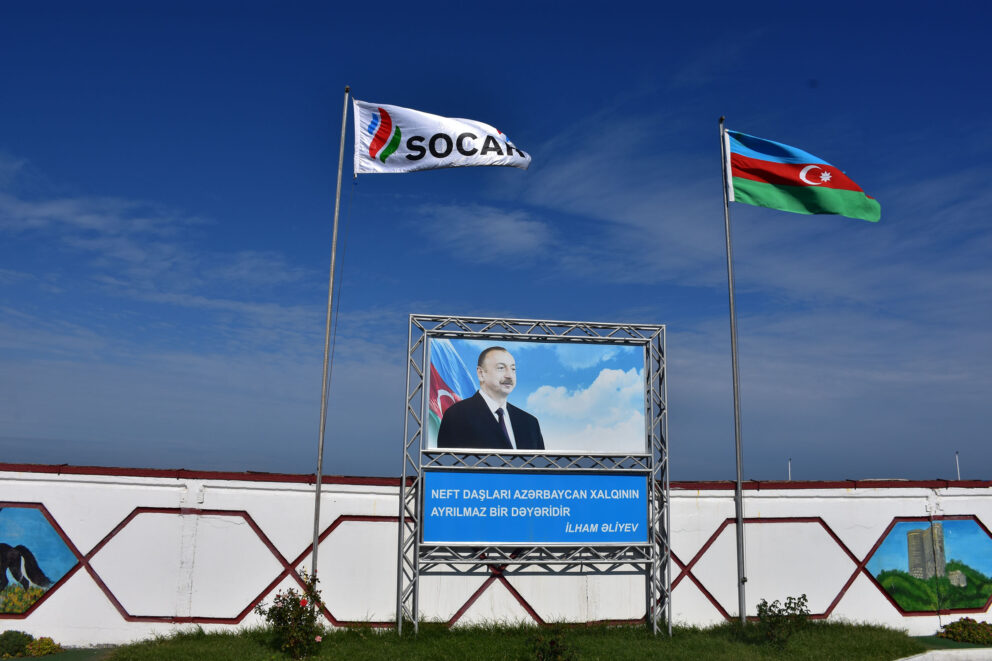
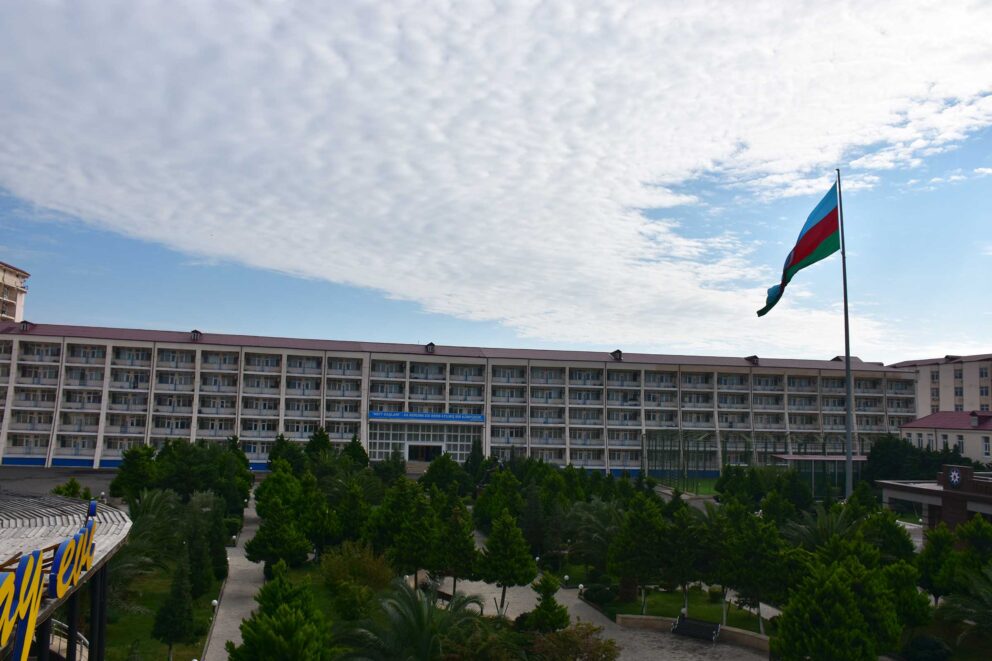
The hum of industry is all around us as we’re decanted from the ferry into small Soviet-era buses under the watchful eye of Azerbaijan’s president Ilham Aliyev. Pictures are discouraged as we drive through a central roadway surrounded by pipes and cables before opening out into a central courtyard overlooked by Soviet dormitory blocks. Aliyev greets us again from another billboard.
The barren seating area seen on the internet in dated articles has been replaced with lush, preened park separated by walkways. A few workers scurry past, observing us with intrigue. Everything outside of the central courtyard remains off-limits.
Our short guided tour, which we take with a pinch of salt, takes us around the park, with a huge Azerbaijani flag floating above our heads. The main courtyard in front of the women’s quarters is the site of the platform’s original oil well, a modest set of pipes and wheels forming the site’s first outdoor museum piece.
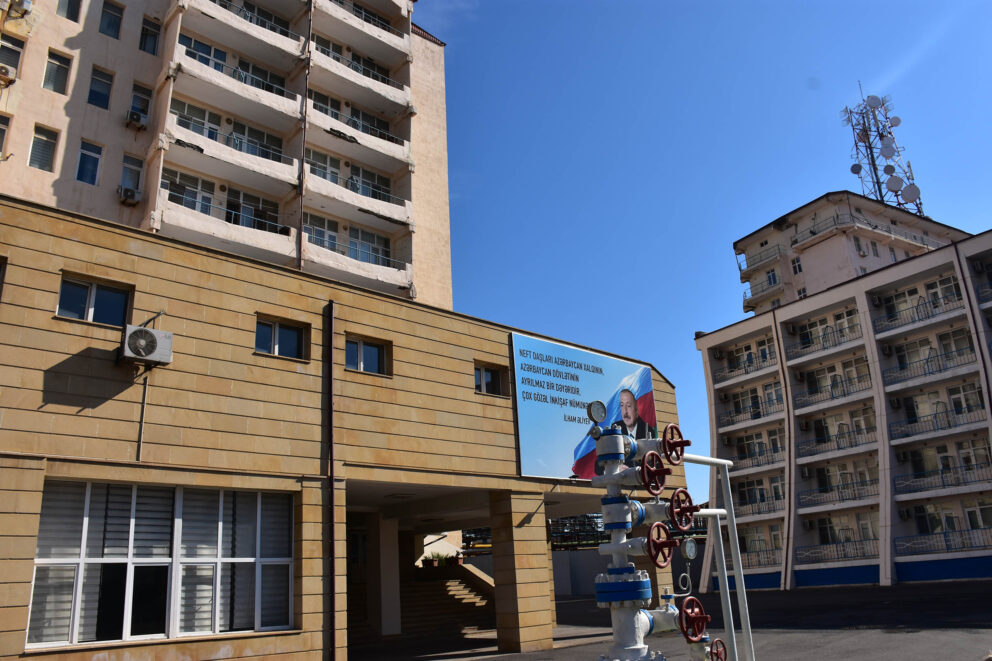
It’s here that our guide, translating for a grizzled staff member of the State Oil Company of the Republic of Azerbaijan (SOCAR), tells us about the site’s history. While firsts in the oil industry are often disputed, the pivotal role the site’s output played in powering the USSR is undeniable, with the technical ingenuity required to build a functioning community there no less impressive.
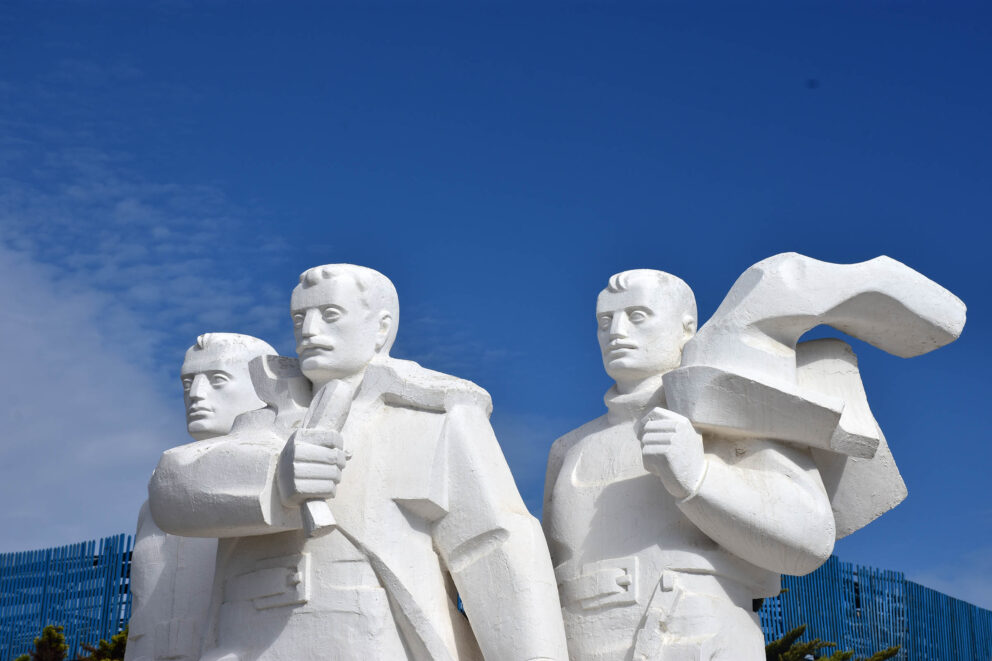
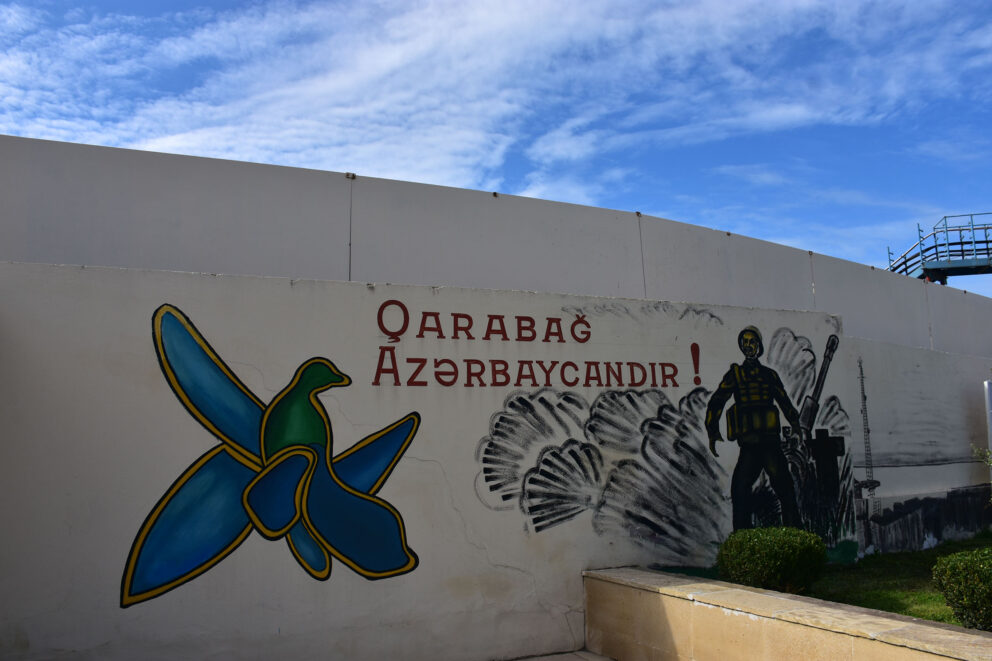
The state’s oil wealth and power continues to this day, even if the site’s output has dwindled, with no irony lost on us that our visit falls a week before COP29. A short look around the park’s museum highlights the world leaders who’ve passed through Baku and monuments in the gardens honour those lost to industrial accidents, storms and regional conflict. Our guide lets slip that the site could work as a tourist destination once the oil dries up.
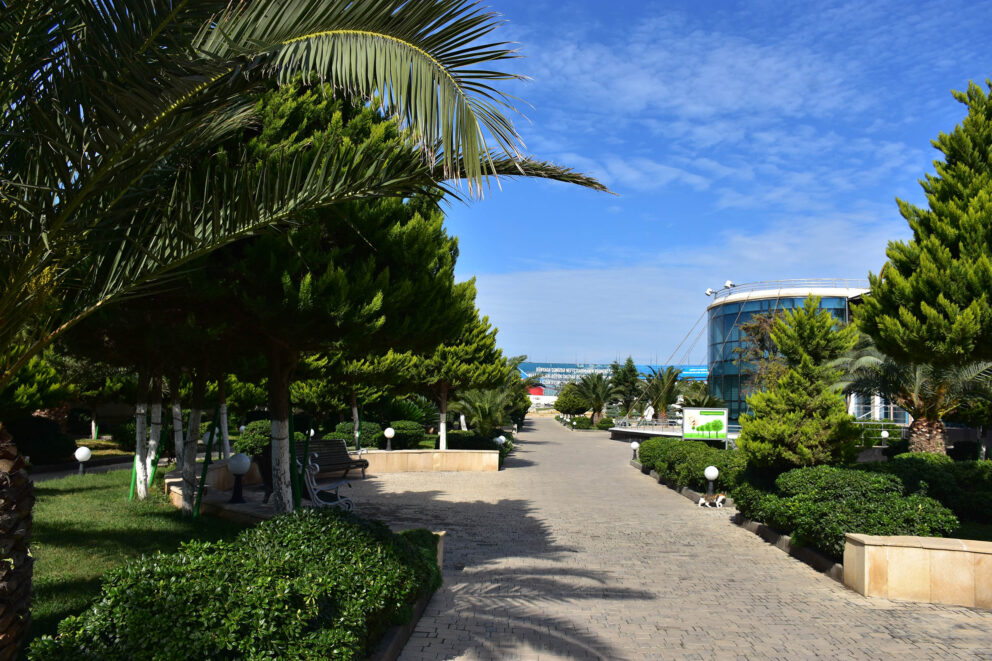
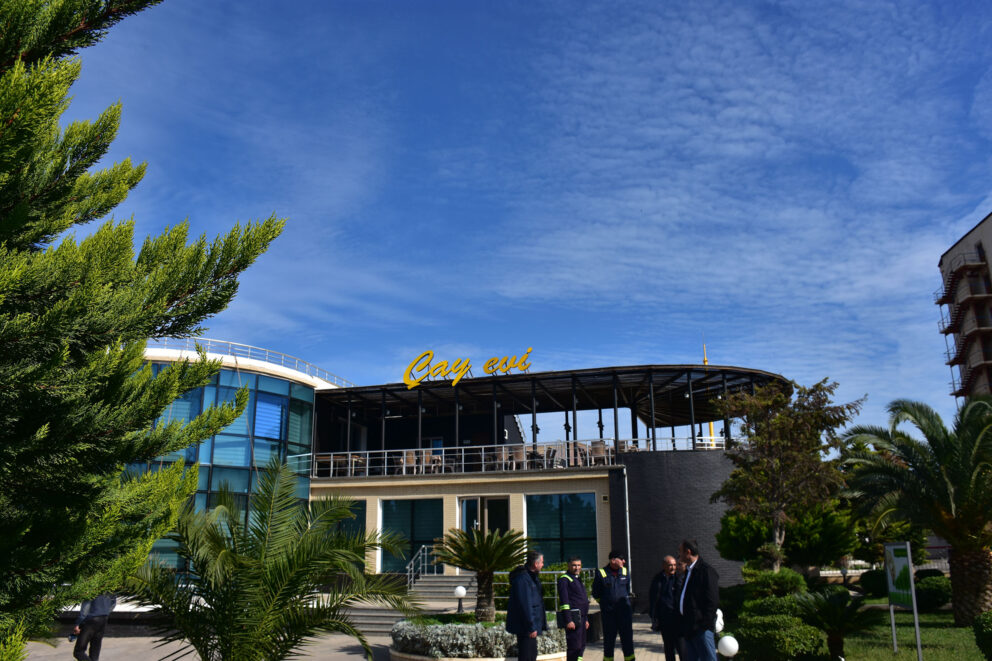
As we stop for lunch in the park’s airy events pavilion, an opportunity to go onto the roof allows a rare perspective of one of the lesser visited places on earth. You get the sense that a helicopter entrance, although teased, would reveal too much.
A small rectangle of greenery set against the background of Neft Daşlari’s industrial spread is enough. An hour later we’re back on the ferry to Baku, a secret place only slightly less mysterious as it disappears behind us.
Keep In touch
Make sure you never miss an adventure by signing up to our mailing list. Be the first to know about new tours and travel tips.