Article by James Merriman
Lupine Travel continues to take travellers to places that feel genuinely off the beaten track. For my September expedition, I travelled to Libya to explore Leptis Magna, which is arguably one of the most spectacularly preserved Roman cities in the world.
The first thing you notice upon arriving is the complete silence. There are no coachloads of visitors, no queues. Absolutely no souvenir stalls appear in sight. The early morning heat is already intense, like a heavy load, with no breeze for relief.
At the entrance gate, I’m greeted by my guide, Mahmud. He greets me with a firm handshake, his other hand holding a steaming cup of Arabic coffee. Noticing my water bottle, he gives me an approving nod. I smell the aroma of cardamom from his drink, and my anticipation builds as we head down a dusty path shaded by tall palms.
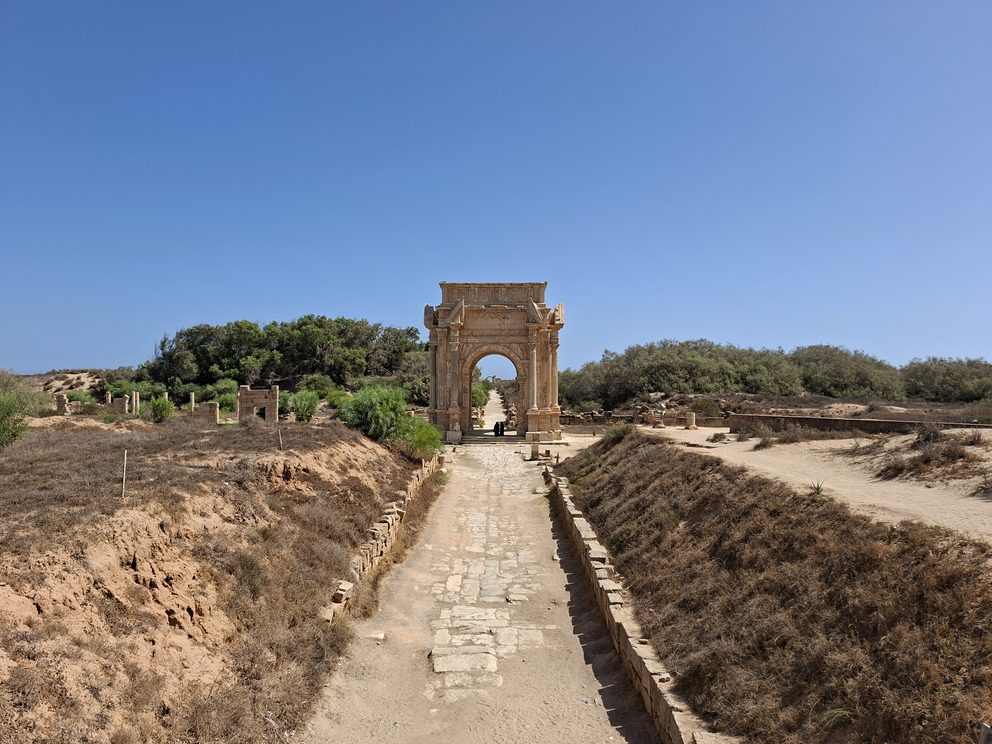
A magnificent four-sided arch soon rises into view. Mahmud explains that this is the arch of Septimius Severus. He was born right here in Leptis Magna and rose through the ranks of the Roman army to become Emperor in 203 AD. The structure is decorated with marble reliefs depicting imperial triumphs, supported by limestone columns. I stand in the shade it provides and study the inscriptions that tell an ancient political story in stone.
Leading me eastward, Mahmud gestures towards a paved road. Deep grooves are still visible where heavy chariots once passed. He calls it the M1 for the city, which makes me laugh. His surprising knowledge of UK motorways adds a brilliant touch of humour to the sweltering morning walk.
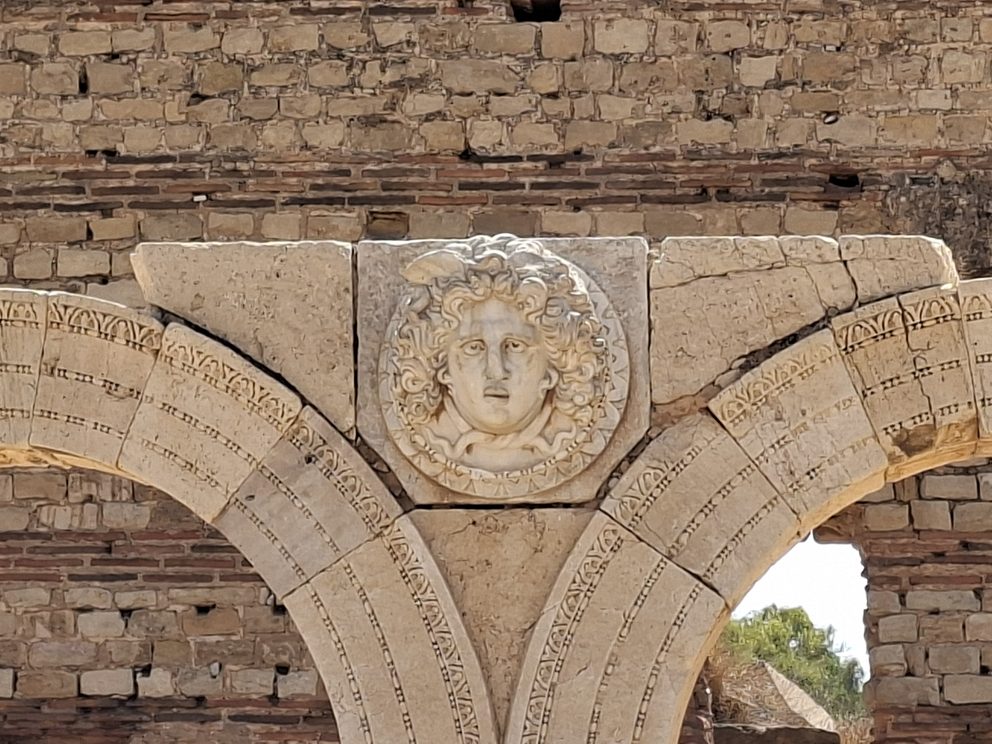
This road leads us straight to a vast open square paved entirely in polished marble. This is the Forum. Mahmud tells me this is where caravans arriving from the deep Sahara would meet ships from across the empire to exchange their goods. Heat shimmers off the floor, and sweat trickles down my neck. We take brief shelter underneath one of the lofty columns surrounding the marketplace. Mahmud directs my attention upward to a circular carving of Medusa. Her hair is a tangle of snakes. He explains she was placed there to ward off evil spirits from the visiting traders.
Continuing our walk, we find a very different kind of carving on a wall. It is a crude figure carved into the stone that looks exactly like a wilted cucumber positioned between two golf balls. Slightly embarrassed, I ask Mahmud if it means what I think it means. He laughs and points westward towards the edge of the city, confirming that it is a signpost for the ancient red-light district. Some directions are clearly timeless.
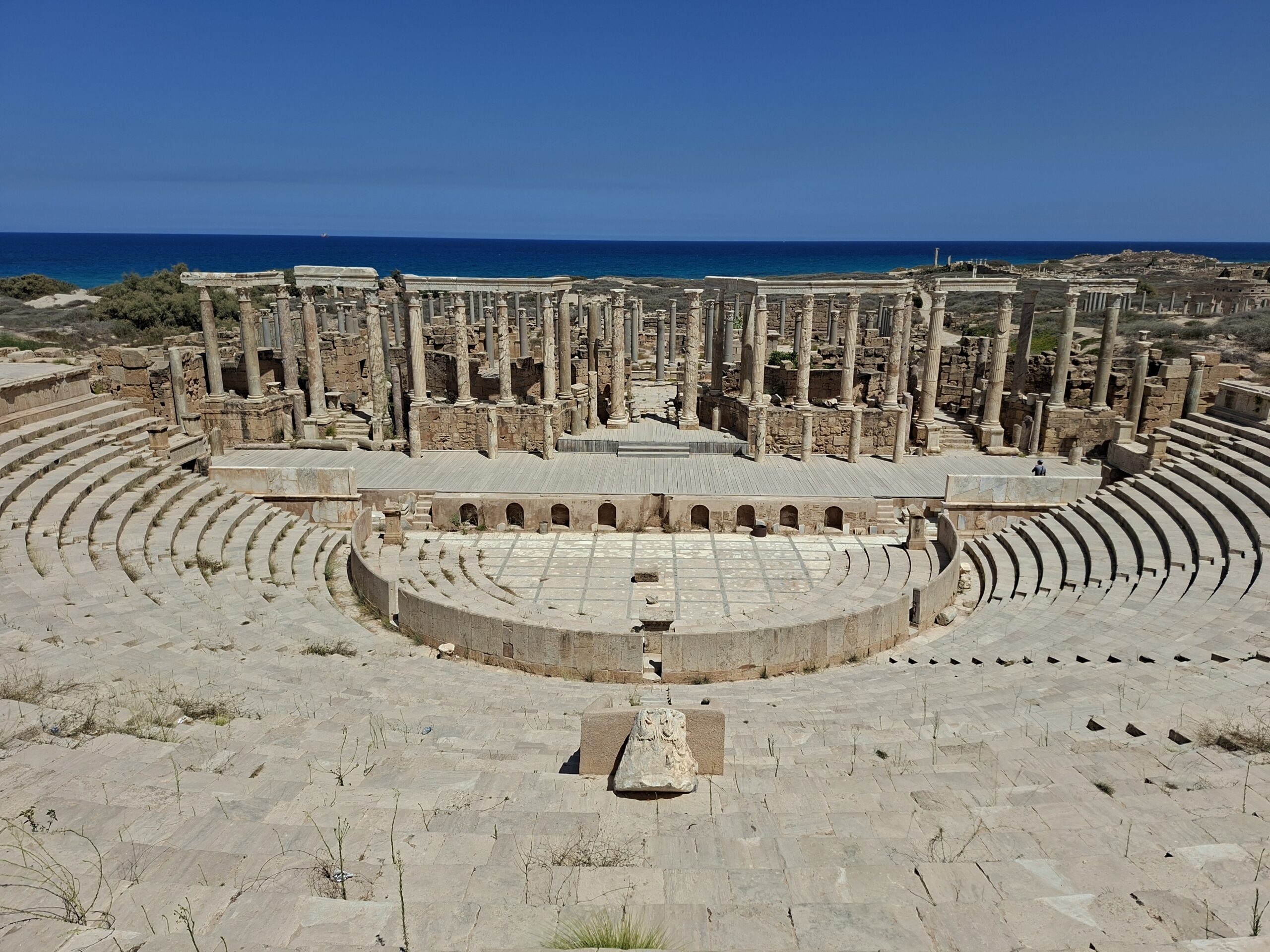
The only company we have as we walk further uphill is the sound of crickets in the rough grass. Mahmud assures a grand finale, and he is right. Ahead rises a forest of titanic pillars positioned in front of a perfectly preserved arc of sun-bleached stone seats. After years of reading about this place, I have finally set eyes on the amphitheatre of Leptis Magna. Mahmud points to the top tier and tells me to take a seat. I climb up and take in a grandstand view of the whole arena backed by the clear royal blue of the Mediterranean Sea. The smell of sea air mixes with the dry desert dust.
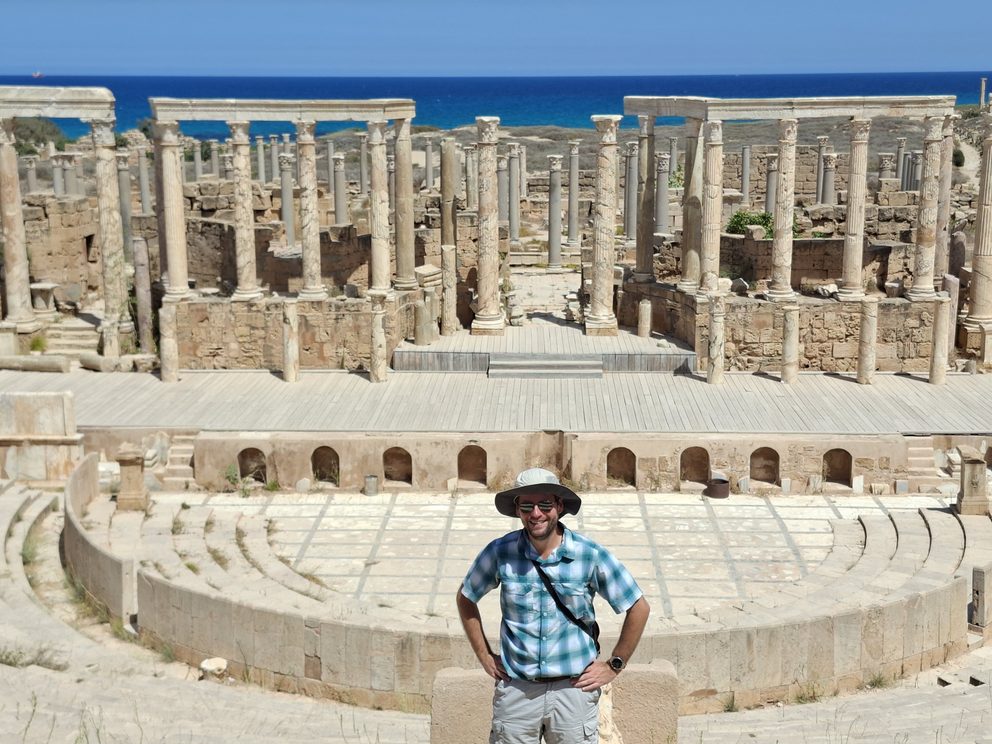
Sitting there entirely alone in a Roman amphitheatre of this scale is an experience very few places can offer today. Leptis Magna has been asleep for centuries, but standing among its ruins brings the ancient world vividly to life. It is exactly the kind of destination that makes travelling to the edges of the map so rewarding.
—
Read the full itinerary and join Lupine on our next available departure: Libya Tours
James Merriman is a travel writer, photojournalist, a Fellow of the Royal Geographical Society and traveller to over 150 countries, who lives in Devon. He loves exploring and writing about the world’s landscapes, cuisines and cultures.
Visit www.jamesmerriman.co.uk and follow James on Instagram: @mezzarino
Keep In touch
Make sure you never miss an adventure by signing up to our mailing list. Be the first to know about new tours and travel tips.